
Disability Pride Month feature: The hand I was dealt
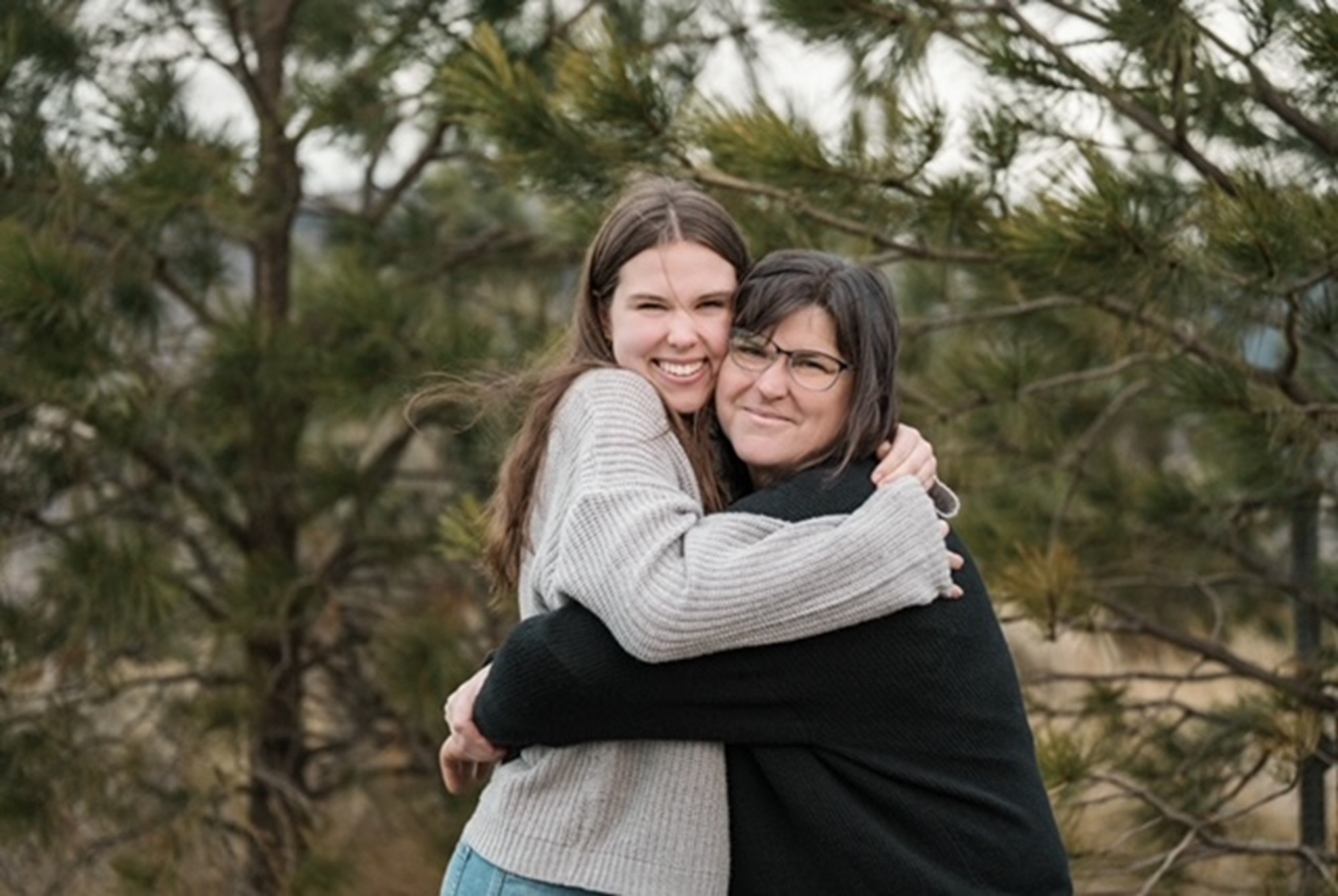
For as long as I have been me, I’ve been a congenital amputee (now more commonly referred to as a person with a congenital limb difference), so I’ve never known anything different. It’s simply the hand I was dealt, so to speak.
In 1971, when I was born, there was no prenatal ultrasound to prepare my parents, or to prepare them to answer the question, “Is the baby healthy?” The standard response to newborns was, and possibly still is, “ten fingers and ten toes.” My parents encouraged me every day to try everything, and if I fell, they promised they would be there. It turned out to be a pretty great way to be supported. It helped me develop creativity, grit, resilience, and humour.
Early in my youth, I fell in love with sports. I committed myself to basketball and soccer, and I carried that passion into post-secondary soccer at Cariboo College and UCC (now TRU). Sports gave me a sense of belonging, a team identity, and a lifelong habit of showing up, even on the days when showing up felt like the real win.
People sometimes assume that having a limb difference must automatically limit what you can do in sport. That wasn’t my experience. I’ve always found ways to adapt without making it the only story. That doesn’t mean everything was effortless, not at all, but the effort became normal. I spent years refining small techniques most people never have to think about. When playing basketball, I learned how to shield the ball, dribble behind my back, and generate offence when working from one side. I put in hours alone in the gym, in the dark in my driveway, and in the winter in my garage. Because I loved athletics so much, I didn’t see practice as a chore. Practice was a kind of problem-solving.
That love of sport grew into community coaching. Some of my proudest years have been spent on sidelines and in gyms, cheering on kids who were learning not just skills, but confidence. I coached my daughter’s soccer team from age five to twelve, those years when shin guards are always on the wrong legs and a “game plan” is mostly enthusiastic herding. Later, I coached volleyball from grade five through to my daughter’s graduation, and I coached basketball for five years at both David Thompson Elementary and Westsyde Secondary. Coaching offered me a trusted platform to lead by example and openly demonstrate difference, helping others understand what those differences mean.
It also gave our community a way to learn about life with one hand. When I was growing up, I answered many questions from peers and kids who were curious, blunt, and usually well-intended. When I became a parent and was suddenly surrounded by children and youth again, the questions started right back up. My daughter, Shelby, once brought me to her school for show and tell with my prosthetic because there were so many questions from her classmates. She sat beside me, held my hand, and answered with pride. She is now known to offer people a helping hand, pointing out that we have a few extras in the garage and around the house.
Being a coach brought a different kind of question. Teaching skills that I physically could not demonstrate meant bringing in guest coaches to help players develop. Coaching created moments where curiosity could turn into understanding. Sometimes the questions were practical: “How do you do that?” Sometimes they were concerned: “Does it hurt?” I learned to respond with honesty and lightness because I wanted kids to feel safe asking. There is far less mystery when questions are welcomed, and I have always preferred them to whispers. When we normalize respectful questions and real conversations, it encourages more of them.
Of course, living with a limb difference comes with a few complexities as an athlete. The ones that still make me smile are the classics. Soccer throw-ins, I have never taken one, though I seem to have strong opinions about whether they are done well. Or the art of tossing a ball in Triple Ball (volleyball for those below the age of 13) without adding spin during gameplay. My twelve-year-olds would tease me and yell, “It’s coming in hot.” Those moments were never awkward. They were filled with laughter and learning.
The only time my perspective was truly challenged came in 2018, when I was playing goal in soccer, dove, and tore my rotator cuff and labrum, requiring surgery. In case it’s important, I made the save. The result, I couldn’t lift or move my arm. I never missed my hand until I couldn’t use the one I had. I have always been fiercely independent, my daughter would say independent to a fault, but suddenly I could not use either hand. It was new. It was hard, humbling, and very real. I relied heavily on my amazing family, especially my father, who was already in his seventies. He moved in with my daughter and me while I recovered. As a single parent, I was unable to keep up with many of my responsibilities. That experience reinforced my deep gratitude. Independence is a gift, and community is a superpower. Letting people help me reminded me how love shows up, in meals, rides, laundry, patience, and quiet reassurance on tough days.
My shoulder recovered, for the most part, and I am grateful for the everyday things I am able to do. I still feel the same spark I felt as a teenager stepping onto a court. These days it shows up in pickleball or squash. I have found new focus in learning skills like serving a ball tossed off my racquet instead of thrown by another hand. I am grateful for all that my experiences have given me. I am a person with a limb difference. I am an athlete. I am a coach. I am a mom. And I am continually grateful for the people, teams, and communities I am privileged to be part of.
Heather Grieve is a proud single mother to a 19-year-old daughter, a community and school coach, and an advocate for inclusion and accessibility. Born with a limb difference, she is passionate about resilience, community, and helping others reach their full potential. Professionally, Heather is a manager with BCLC and serves as Chair of the Kamloops-Thompson Board of Education.