
This self-paced course provides a practical introduction to the principles, concepts, and practices of accessibility
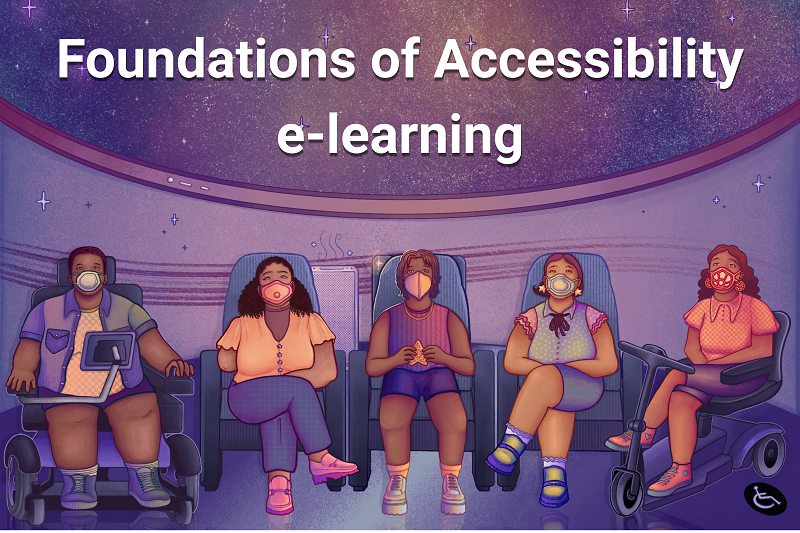
Whether your organization is new to accessibility or looking to deepen your team’s understanding, our new e-learning course Foundations of Accessibility can help. This self-paced course provides a practical introduction to the principles, concepts, and practices of accessibility.
Through 7 engaging modules, learners explore legislation, respectful language and ableism. Learners build an understanding of key concepts, challenge common assumptions, and discover practical strategies for reducing barriers and designing for human diversity.
Who is this course for?
Foundations of Accessibility is designed for professionals across Canada. The content supports employees from nonprofits, as well as public and private sector organizations.
Learning experience
Each module includes a combination of:
- Written content
- Reflection questions
- Knowledge checks and practice activities
- Examples and case studies
Case studies and stories include an optional narration feature to support different learning preferences.
Course length
This course is designed to be completed at your own pace. Total reading content is approximately 14,000 words. Completion time could take between 1.5 and 2.5 hours depending on the learner’s pace and how much they engage with the optional reflection activities.
Pricing packages
Purchase seats for as low as $40 per learner. If your organization has a Learning Management System, you can also purchase a license to the course files for upload into your system.
Contact us to discuss volume discounts.
Learning objectives
By the end of this course, you’ll be able to:
- Articulate key requirements of current accessibility legislation in the context of the social model of disability
- Differentiate between the social and medical model of disability
- Unpack definitions of disability, barrier, accessibility, accommodation, and ableism
- Relate the concept of intersectionality to accessibility work
- Identify current language and out-of-date terms about disability
- Link misconceptions of average to the presence of barriers
- Link ableism to the presence of barriers
- Challenge ableist norms
- Recognize how humans vary in the way they think, feel, do, sense, and communicate
- Apply a practical framework to your accessibility work
Get in touch to learn more about enrolling your team in the course.

“I really like the course and I think it will be useful to a variety of folks out there. The course was easy to understand, easy to progress through, and it had really great information with would likely help anyone in any area of work.”
– Colin Reid, District Principal, Student Support with Surrey School District